Your company has invested in visibility. Endpoint telemetry. Identity logs. Cloud monitoring. A SIEM that brings them together. But there is a question worth asking before you buy another feed or rebuild another detection rule: how much of the activity preparing an attack against your business can you actually see?
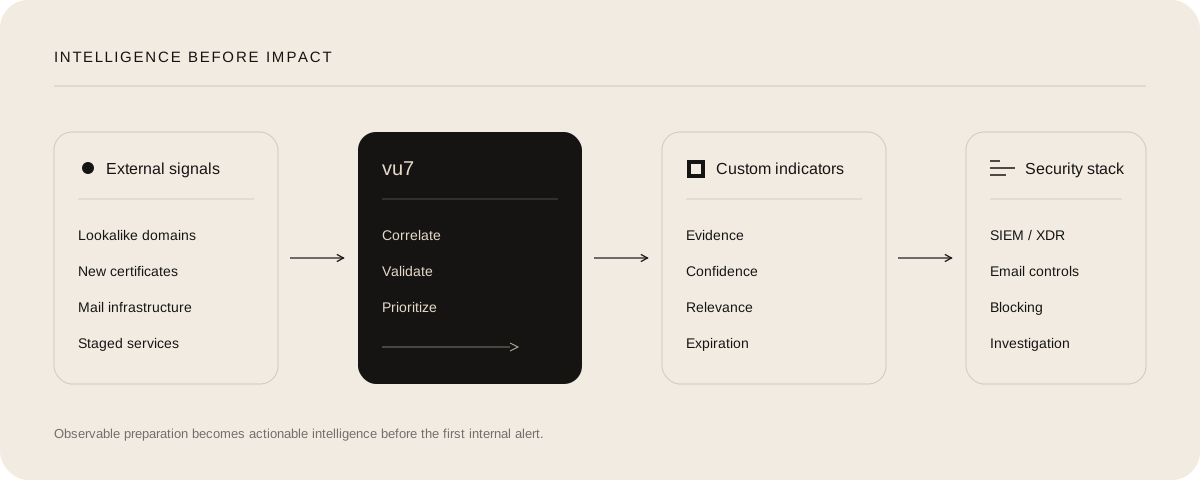
An alert inside your environment may be the first event your team observes. It does not have to be the first opportunity to act.
The attack starts outside your environment
Before a phishing email reaches an employee, someone may have registered a lookalike domain, configured a mail service and prepared a convincing sign-in page. Before malicious software connects to its operator, the infrastructure supporting that connection may already exist.
These preparations can leave observable traces outside the systems your company controls. They deserve attention alongside the events generated inside your network.
A newly registered domain or certificate is not proof of an attack. The useful intelligence comes from connecting evidence: what the infrastructure presents, how it changes, what it is associated with and why it matters to your company. Timing creates an opportunity; validation makes it actionable.
Give the SOC a decision it can make
A list of suspicious IP addresses is easy to deliver. A defensible recommendation takes more work.
Consider a domain impersonating your employee login. A useful intelligence record should explain the relationship to your brand, show the observed impersonation, distinguish confirmed activity from assumptions and record when the evidence was collected. It should also identify who can act on it.
Your analysts can then decide whether to investigate further, strengthen email filtering, block a confirmed malicious destination or submit an abuse report to the relevant provider. The action should follow the evidence and the likely business impact.
That is the difference between adding another item to the queue and helping someone close a case.
Make your existing controls work with earlier context
Threat intelligence already has a place in enterprise detection. For example, Microsoft Sentinel supports matching imported threat indicators against events from connected data sources, generating alerts and incidents when configured rules find a match.
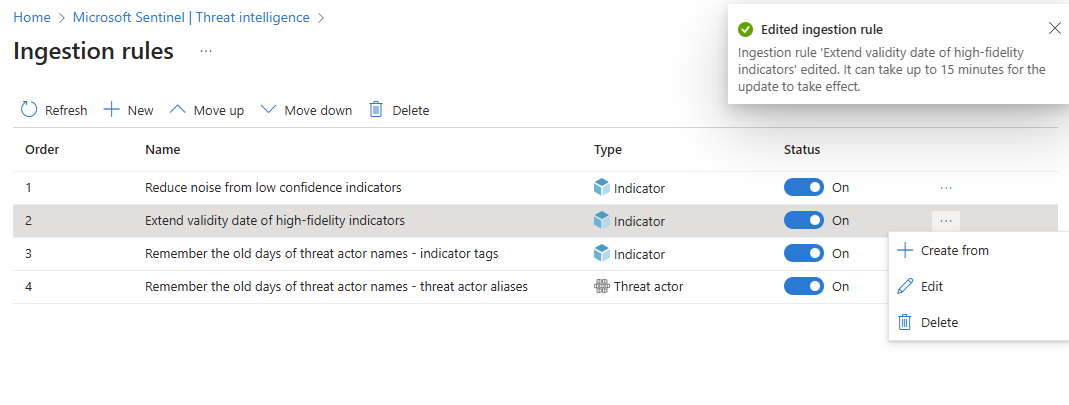
Earlier external intelligence can support a separate workflow before an internal match exists. Your team can assess an impersonation site, prepare protective controls and coordinate a response while continuing to monitor for contact with company systems.
This requires deliberate integration. Assign ownership, define confidence thresholds and decide which actions need approval. Keep indicators current and retain the evidence behind each decision. An address can change hands; a domain can be remediated. Yesterday’s assessment should not become a permanent block without review.
AI needs evidence, too
Automated investigation becomes more useful when its inputs contain provenance, timestamps, organizational relevance and a clear separation between observations and conclusions.
Give an agent an unexplained domain and it has to fill in the gaps. Give it a documented case and it can help summarize the evidence, identify missing checks and prepare a response for review.
The same discipline should govern automated action. Confidence must be explicit, permissions must be scoped and consequential changes must remain accountable. Faster processing is valuable when it helps the team reach a better-supported decision.
Measure the opportunity you gained
For a company, prevention needs an operational definition. Track when suspicious infrastructure was first observed, when it was validated and when a protective action was completed. Where a campaign later becomes observable, compare those timestamps with the first attempt against your organization.
Also measure incorrect assessments, reversed blocks and analyst effort. A rising indicator count is not evidence of better protection. Neither is a takedown, by itself, proof that a breach would otherwise have happened.
The useful question is whether your team gained time and used it to reduce a credible threat.
Intelligence before impact
At vu7, we are building around that opportunity: identifying adversary infrastructure and connecting it to the organizations that need to act. Our experience finding vulnerabilities across complex environments informs the questions we ask of every signal: what does this enable, who could it affect and what can the defender do now?
Security teams need intelligence that reaches them while a decision can still change the outcome.
Talk to vu7 about earlier visibility into threats targeting your company.